Introduction
As global agriculture faces challenges like soil degradation, water scarcity, and the increasing demand for sustainable food production, hydroponics is emerging as a transformative solution. This innovative technique allows plants to thrive without soil, using nutrient-rich water instead. Whether for home gardeners or for students involved in agriculture field, hydroponic systems offer an efficient, sustainable, eco-friendly approach to modern farming.
Why Hydroponics Is Crucial
a) Scarcity of Agricultural Land
land is rapidly declining due to urbanisation, soil degradation, price and the impact of climate change. Traditional farming requires vast amounts of land and water, both of which are becoming scarcer. Hydroponics provides a solution by allowing crops to be grown in controlled, compact environment. With no need for soil, space requirements are minimised, enabling farming in rooftops or in their own spaces.
b) Water Scarcity
Water is another critical resource for farming, yet conventional agriculture uses up to 70% of the world’s freshwater, with much of it wasted due to evaporation. Hydroponics drastically reduces water usage, utilising up to 90% less than traditional farming methods. This makes it an ideal solution for regions facing water shortages or those seeking to conserve water and reuse it.
c) Faster Growth and Increased Yield
With the global population projected to reach 9.7 billion by 2050, the need for more efficient food production is urgent. Hydroponic systems accelerate plant growth by providing precise nutrient solutions and optimal growing conditions, enabling crops to grow up to 50% faster.
Getting Started with Hydroponics
Setting up a hydroponics farm is a feasible option for those willing to invest in sustainable farming.
it’s important to research about different hydroponic systems to see which options suites you best so options are as follows below:
- Deep Water Culture (DWC): Plants are submerged in nutrient-rich water, with oxygen supplied to the roots via air stones.
- Nutrient Film Technique (NFT): A thin film of nutrient solution flows over the plant roots, providing nutrients and oxygen.
- Ebb and Flow: The system periodically floods and drains the plant roots with nutrient solution.
Regardless of the system, the key to success lies in controlling environmental factors such as light, temperature, and humidity, which help optimize plant growth.
Nutrients in Hydroponics
In hydroponics, plants receive essential nutrients directly through the water with the help of system, rather than from soil. The nutrient solution is carefully balanced to provide the right amount of macronutrients and micronutrients for optimal plant health.
The macronutrients typically include:
- Nitrogen: Essential for plant growth and leaf production
- Phosphorus: Crucial for root development and flower formation
- Potassium: Helps with water regulation and overall plant health
Micronutrients like Magnesium, Calcium, Iron, and Zinc are also vital for proper growth. These are all included in the nutrient mix, along with additional compounds like Calcium Nitrate and Magnesium Sulfate, to ensure plants receive the perfect balance for accelerated growth.
How Hydroponics Can Help Entrepreneurs
Starting a hydroponic farm requires an upfront investment in systems, nutrient solutions, and grow lights, but the potential returns are substantial. A well-managed hydroponic setup can produce high yields much faster than traditional farming methods.
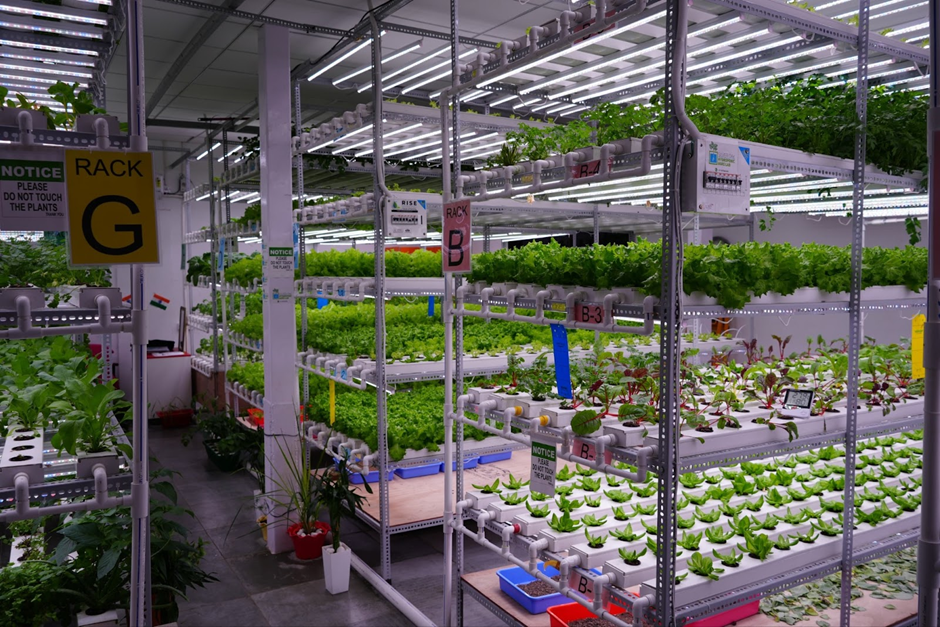
For example, in a vertical farming system, you can grow a variety of crops in stacked layers, optimising limited space. These crops include:
- Hydroponic herbs like basil, mint, and parsley
- Leafy greens like lettuce and spinach
By controlling environmental factors and reducing exposure to pests, hydroponic systems reduce the need for pesticides, which appeals to consumers looking for clean, chemical-free product and fresh product.
Hydroponics can be set up almost anywhere, including on urban rooftops, making it a practical solution for entrepreneurs looking to utilise limited space for farming. This flexibility opens up opportunity for small-scale operations.
Return on Investment (ROI) of Hydroponics
Hydroponics offers an attractive return on investment, especially in urban farming environments where land is limited and expensive. Hydroponic systems can yield up to 10 times more produce per square foot than traditional farming methods. They also require less water and fewer pesticides, which reduces costs and increases long-term profitability.
Using vertical farming techniques, hydroponic systems can also reduce the time it takes for crops to reach maturity—sometimes up to 50% faster than traditional methods. With the increasing market demand for locally grown, pesticide-free produce, many agri-entrepreneurs have found hydroponics to be a highly profitable investment.
Conclusion
for urban farming operations, this soil-free cultivation method can revolutionise how we produce food.
By reducing water consumption, eliminating soil-based issues, and enabling year-round cultivation, hydroponics provides new opportunities for entrepreneurs. With continued technological advancements and growing support for sustainable agriculture.
With my experience I can say that vegetables grown in hydroponic are fresh and have long shelf life compared to traditional farming .